

Kilo vs Datacake: which IoT platform fits your deployment?
Datacake is a polished LoRaWAN-first IoT platform with a free built-in network server, 436+ ready device templates, and an AI assistant — it has earned its 40,000+ users. Here is where the two platforms genuinely differ, verified against Datacake’s live public pages.
Compare
Kilo vs Datacake at a glance
| Capability | Kilo | Datacake |
|---|---|---|
| AI assistant | Acts for you, with confirmation gates | Q&A, reports, workflows |
| Built-in LoRaWAN network server | ✓ Free, no per-gateway fees | |
| Built-in mioty network server | — | |
| Ready-made LoRaWAN device templates | Map any payload inline | 436+ templates |
| Vehicle tracker integration (OBD2/CAN/GPS) | 2,000+ tracker templates | — |
| Rule versioning, rollback & step-through debugging | — | |
| Closed-loop device commands (verified delivery) | Downlinks via rule engine | |
| 3D digital building twin (editor, DXF import) | ✓ 60+ object catalog | — |
| Alarm escalation chains + Apple-approved Critical Alerts app | Email, SMS, webhooks + mobile push | |
| White-label & customer workspaces | — | ✓ Own branding + domain |
| On-premise deployment | ✓ Same server, cloud or on-prem | — |
| Free tier | 5 devices | 5 devices |
| Entry paid plan | €25/mo (25 devices) | €25/mo (25 devices) |
| Audit logs | ✓ Immutable, all plans | Plus plan (€659/mo) |
Datacake column verified against public Datacake pages on 2026-07-02. Spot an error? Tell us and we’ll fix it.
Choose Datacake if…
- You want the fastest possible LoRaWAN sensor onboarding: 436+ device templates ship with payload decoders, dashboards, and downlinks preconfigured.
- You resell IoT to your own customers and need white-label branding, custom domains, and per-customer workspaces today.
- You are migrating off another LoRaWAN network server — Datacake publishes step-by-step migration guides for The Things Stack, Actility, Loriot, and ChirpStack.
- You value a large, established community: Datacake reports 40,000+ users across 50+ countries.
Choose Kilo if…
- You want an AI assistant that acts — onboarding devices, writing and deploying rules, configuring alarm escalations — with a confirmation gate before every consequential change, not only answering questions.
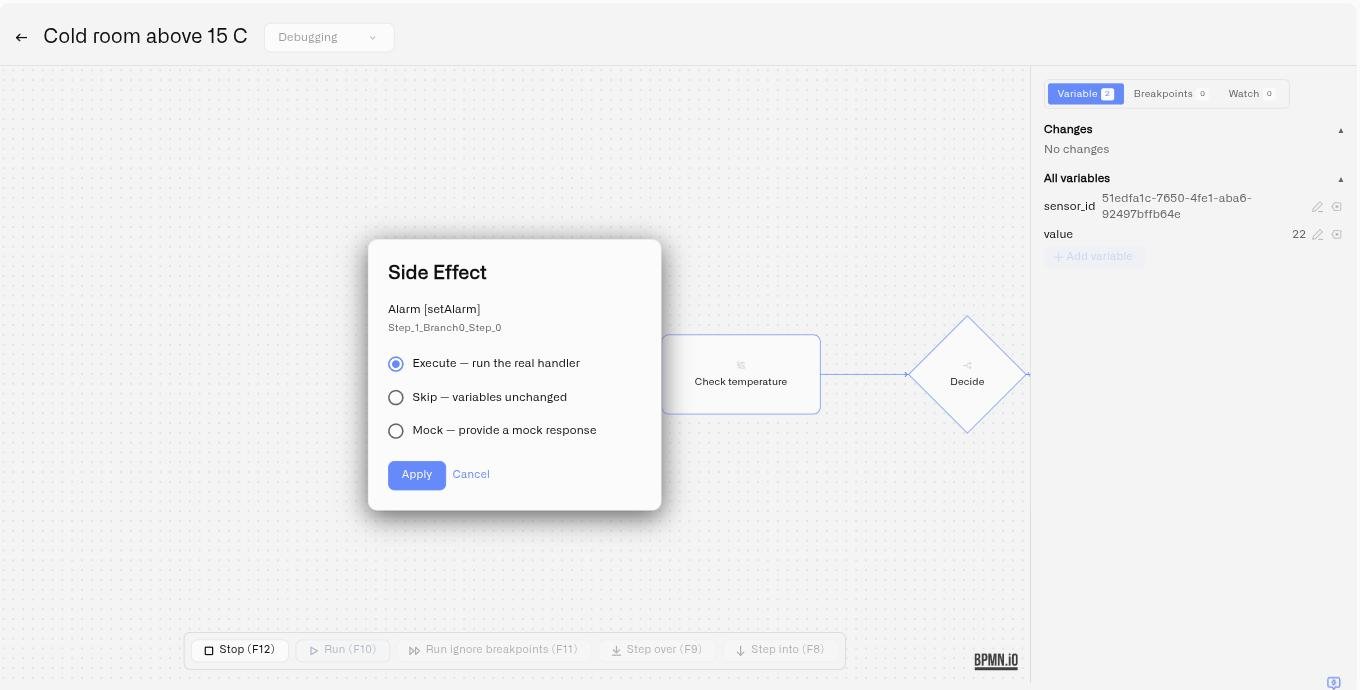
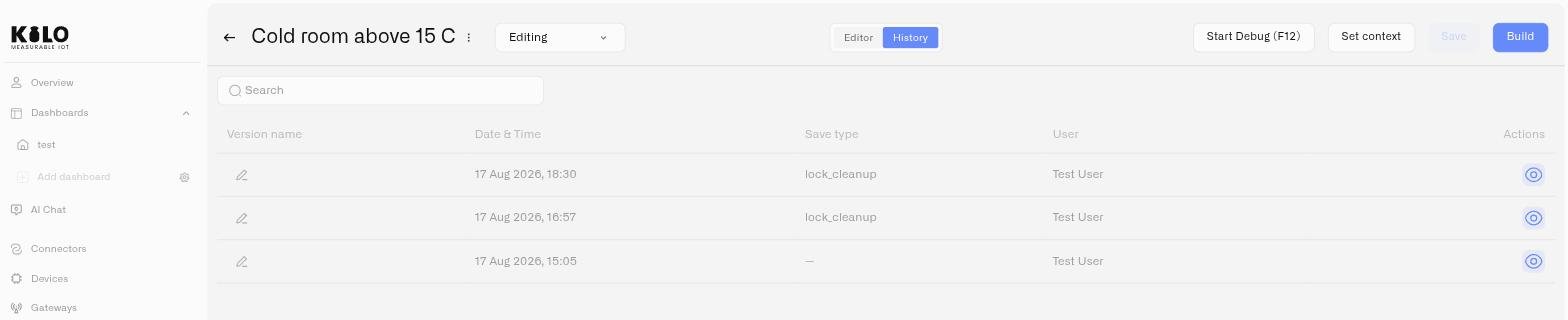
- You treat automations like production software: Kilo’s visual rules add step-through debugging, versioning, and one-click rollback before anything touches live devices.
- You run mixed LPWAN fleets: LoRaWAN and mioty terminate in the same built-in network server, and 2,000+ vehicle-tracker templates extend the fleet beyond the building.
- You need an on-premise path or a 3D digital building twin — draw the building, import a DXF plan, and bind live sensors to a 60+ object catalog.
Switching from Datacake — or running both
You don’t have to cut over in one weekend. Start a free Kilo workspace alongside Datacake, re-point a LoRa Basics Station gateway at Kilo’s built-in network server, and rebuild your payload mappings with inline normalization while both platforms run in parallel. Book a call and we’ll walk your device list first.
Compare
Kilo vs Datacake FAQ
Is Datacake free?
Yes — Datacake’s first 5 devices are free forever, including its LoRaWAN network server and unlimited gateways. Paid plans start at €25/month (Hobby, up to 25 devices) and scale to €659/month (Plus, up to 1,000 devices), with add-ons for extra rules, retention, and white-label apps. Kilo’s free tier is also 5 devices, with paid plans from €25/month.
Is Kilo a good Datacake alternative?
If you want a Datacake alternative with the same LoRaWAN-without-infrastructure model, yes: both include a free network server and a 5-device free tier at matching entry pricing. Kilo adds mioty, an AI assistant that executes changes with confirmation, rule debugging with rollback, a 3D building twin, and an on-premise option. Datacake counters with 436+ device templates and white-label workspaces.
Can I migrate my LoRaWAN gateways and sensors from Datacake to Kilo?
Gateways that speak LoRa Basics Station or the Semtech UDP packet forwarder can be re-pointed at Kilo’s built-in network server, and device payloads are re-mapped with inline normalization — you see the live raw payload and bind fields to typed sensor templates yourself. Run both platforms in parallel until you trust the new pipeline.
Compare
More comparisons and alternatives
See the difference on your own sensors
Start free with 5 devices — the network server is already running. Or book a call and we’ll map your Datacake workspace to a Kilo deployment together.