
 English
  Français
  Español
  Deutsch
  Português
  Italiano
  العربية
 Connectivity
The IoT connectivity management platform for every protocol
LoRaWAN, mioty, MQTT, and vehicle trackers — one mental model for all of them. The LoRaWAN network server is built in, any LoRa Basics Station gateway connects over TLS, and MQTT runs on your broker or ours.
How it works
How Kilo manages IoT connectivity: Connector → Connection → Device
Every data path on the platform starts the same way, whatever the protocol. Learn the model once — it holds for LoRaWAN, vehicles, and MQTT alike.
Connector
Binds a protocol to your organization — LNS for LoRaWAN, Tracker for vehicles, MQTT for anything that publishes. Without one, the server has no channel to receive device data through.
Connection
The live link your data travels over: gateways and the built-in network server for LoRaWAN, a broker for MQTT, the tracker endpoint for vehicles.
Device
Registered through any connector in one uniform workflow. Every reading then lands in the same dashboards, rules, and alarms.
Whatever the radio or wire, data from every connector flows through the same normalization pipeline — so dashboards, rules, and queries work identically across your whole fleet.
Connectors
LoRaWAN, mioty, MQTT, and vehicle-tracker connectivity in one place
Six ways in — one platform on the other side.
Built-in LoRaWAN network server
OTAA joins, session and key management, uplink deduplication across gateways, and downlink scheduling — handled automatically. Nothing extra to host, install, or run.
mioty, the same built-in way
mioty devices connect through the same built-in network-server approach as LoRaWAN — no separate server to operate, and telemetry joins the same pipeline.
External MQTT brokers
Connect up to 10 of your own brokers per organization — with anonymous, basic, certificate, or JWT authentication. Ideal when devices already publish to infrastructure you run.
Cloud MQTT, zero broker ops
The platform provisions a TLS broker endpoint with dedicated credentials and a topic prefix per connector — unlimited connectors, no broker infrastructure on your side.
Vehicle trackers, ready to pair
OBD2, CAN bus, and standalone GPS trackers with preconfigured templates for over 2,000 models — fleet telemetry lands right next to your fixed sensors.
LR-FHSS for massive scale
Frequency hopping supports thousands to millions of devices per network — built for utility metering and wide-area sensing, on the same LoRaWAN gateways.
Gateways
Any LoRa Basics Station gateway — and every MQTT edge
Radio gateways carry LoRaWAN and LR-FHSS; MQTT edge gateways translate everything else. Most multi-protocol deployments run both side by side.
LoRa Basics Station gateways
No proprietary hardware requirement. Register the Gateway EUI, download the certificate bundle, point the gateway at the LNS address — it connects over an encrypted, certificate-authenticated link.
- Encrypted TLS connection — the legacy UDP packet forwarder is not supported
- Downloadable certificate bundle and LNS address per gateway
- Ethernet, Wi-Fi, LTE, or satellite backhaul
- One gateway covers 2–5 km in cities, 15 km+ in open areas
MQTT edge gateways, Zigbee2MQTT included
Bridge non-MQTT field equipment into the platform: Modbus, BACnet, OPC-UA, and Sparkplug B gateways publish JSON into an MQTT connector — and Zigbee meshes join through Zigbee2MQTT hubs.
- Zigbee2MQTT hubs for Zigbee sensors, plugs, and meters
- Modbus, BACnet, OPC-UA, and Sparkplug B bridges
- Works with Cloud MQTT or your own broker
- Same device registration flow as any MQTT device
Beyond radio range
IoT SIM cards
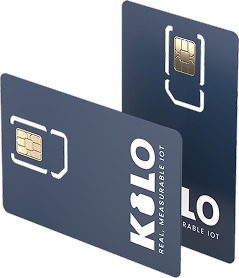
Assets that roam beyond your gateways? Kilo IoT SIM cards keep vehicles and remote equipment connected over cellular in 200+ countries — a separate product with its own page.
Keep exploring
Where your device data goes next
Connectivity
Connectivity FAQ
Do I need to run my own LoRaWAN network server?
No. The network server is built into the platform: OTAA join requests, session and key management, uplink deduplication across gateways, and downlink scheduling are handled automatically. There is nothing extra to host, install, or maintain.
Which LoRaWAN gateways are supported?
Any gateway that supports the LoRa Basics Station protocol — there is no proprietary hardware requirement. During registration you download a certificate bundle and an LNS address; the gateway uses them to establish an encrypted, certificate-authenticated connection. Gateways that only support the legacy UDP packet forwarder cannot connect.
How many MQTT connectors can I create?
Up to 10 External MQTT connectors per organization, each connecting to your own broker with anonymous, basic, certificate, or JWT authentication. Cloud MQTT connectors are unlimited — the platform provisions a dedicated TLS endpoint with its own credentials and topic prefix for each one.
Can I connect vehicles and Zigbee devices?
Yes. The Tracker connector accepts OBD2, CAN bus, and standalone GPS trackers, with preconfigured templates for over 2,000 models. Zigbee devices connect through a Zigbee2MQTT hub, which publishes the mesh as JSON into an MQTT connector.
Every device. One connectivity layer.
Connect a gateway, a broker, or a fleet in minutes — and every reading lands in the same dashboards, rules, and alarms. Free for up to 5 devices.