
 English
 Français
 Español
 Deutsch
 Português
 Italiano
 العربية
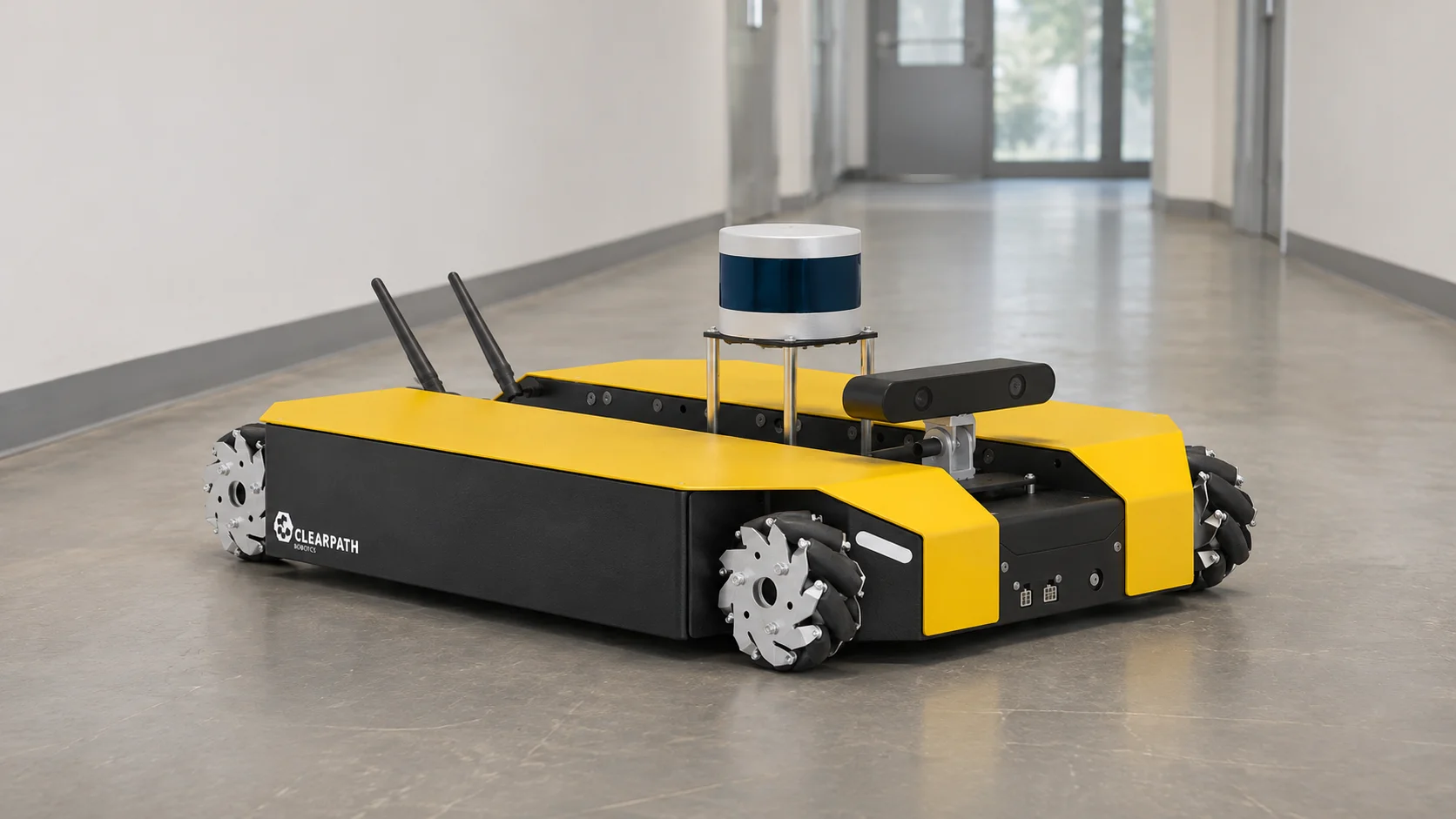
Sensor fusion is the practice of combining readings from several sensors so the result is more accurate, more complete or more trustworthy than anything a single sensor could give you. Your phone does it when a map app works out which way you're facing. A car does it when it merges camera and radar to judge the distance to the vehicle ahead. A robot vacuum does it to work out where it is in your living room.
Most explanations stop at the single machine. There's a second version that matters just as much to anyone who runs buildings or sites: combining events from separate sensors spread across a floor, a warehouse or a campus. The math looks different, but the reasoning carries over, and once you see how the onboard kind works, the site-level kind is much easier to design well.
In short
- Sensor fusion combines several imperfect measurements into one estimate you can trust more than any of them alone.
- Inside a single machine, algorithms such as complementary filters and Kalman filters weight each sensor by how noisy it is.
- Fusion can happen at three levels: raw data, extracted features, or finished decisions.
- Across a building or site, decision-level fusion turns a door opening, motion in a hallway and a camera event into one event a rule can act on.
Where is sensor fusion technology used?
Sensor fusion technology shows up wherever one sensor has a blind spot that another sensor covers, which is almost everywhere.
Phones and wearables are the most common case. An inertial measurement unit (IMU) pairs an accelerometer with a gyroscope, and most phones add a magnetometer, a digital compass, alongside them. The accelerometer knows which way gravity points but jitters with every footstep. The gyroscope measures rotation smoothly but drifts, because tiny errors pile up as it integrates rotation over time. The magnetometer gives a compass heading but gets confused near steel beams and speakers. Fused, they produce a stable orientation that none of them can hold on its own.
Cars combine cameras, radar, ultrasonic sensors and sometimes lidar. A camera reads lane markings and signs but struggles with glare and fog. Radar measures distance and speed reliably in bad weather but has coarse resolution, so it has trouble telling a pedestrian from a pole. Lidar builds a precise 3D outline of the scene. The vehicle's software merges all of them into one picture of what's around it.
Robots and drones blend wheel encoders, IMUs, cameras and satellite positioning. Aircraft have combined inertial navigation with radio and satellite fixes for decades. Patient monitors that read heart rate alongside blood oxygen, and industrial machines that judge bearing wear from vibration and temperature together, work on the same principle. Each sensor has a characteristic weakness, those weaknesses rarely overlap, and fusion uses one sensor's strength to cover another's gap.
What are sensor fusion algorithms?
Sensor fusion algorithms are the rules for deciding how much to trust each input at each moment. They range from a few lines of arithmetic to probabilistic machinery that tracks uncertainty explicitly.
The simplest is a weighted average. If two thermometers in the same room read 21.0 °C and 21.6 °C, and you know the second one is twice as precise, you give it more weight. That intuition, trusting the less noisy source more, runs through every method that follows.
The complementary filter is the classic choice for orientation. It passes the gyroscope through a high-pass filter, keeping fast changes and discarding slow drift, and the accelerometer through a low-pass filter, keeping the long-term direction of gravity and discarding the jitter. Then it adds the two. In code it's often a single line along the lines of angle = 0.98 × (angle + gyro rate × dt) + 0.02 × accelerometer angle. The 0.98 and 0.02 are tuning choices, not constants of nature, and hobby drones and self-balancing robots run filters like this because they cost almost nothing to compute.
Particle filters handle situations where the uncertainty doesn't fit a neat bell curve, such as a robot that could be in either of two identical corridors. They keep thousands of guesses, called particles, weight each by how well it matches the latest measurements, and resample so that unlikely guesses die out. Bayesian networks and neural networks trained on raw sensor data appear in self-driving software and research, where hand-tuned weights stop scaling once there are dozens of inputs.
The algorithm you'll meet most often, though, is the Kalman filter.
How does Kalman filter sensor fusion work?
Rudolf Kálmán published the filter in 1960, and it soon found its way into the navigation computers of NASA's Apollo program. More than sixty years later it's still the standard answer to the question of how to combine a prediction with a noisy measurement.
The filter runs in a loop of two steps. In the predict step, it uses a model of how the system moves to estimate the next state, along with how uncertain that estimate is. In the update step, a measurement arrives and the filter blends prediction and measurement, weighting each by its uncertainty. Then the loop starts again.
Take a delivery robot, with made-up but plausible numbers. It wants to know how far it has traveled along a corridor. Its wheel odometry predicts one value, and a positioning beacon on the wall reports another.
| Source | Estimate | Variance (uncertainty) |
|---|---|---|
| Wheel odometry (prediction) | 12.0 m | 1.0 m² |
| Beacon position fix (measurement) | 10.0 m | 4.0 m² |
| Fused estimate | 11.6 m | 0.8 m² |
Each source is weighted by the inverse of its variance. Odometry gets 1 / 1.0 = 1.0 and the beacon gets 1 / 4.0 = 0.25. The fused position is (12.0 × 1.0 + 10.0 × 0.25) / 1.25 = 11.6 m, closer to the more reliable source. The fused variance is 1 / 1.25 = 0.8 m², which is smaller than either input. Combining two imperfect sources leaves the robot more certain than it was with the better one alone.
In a real filter, the state usually includes position, velocity and often orientation. The single variances become covariance matrices, and a quantity called the Kalman gain does the weighting automatically at every step. Extended and unscented Kalman filters adapt the method to systems whose motion isn't linear, which describes most real robots and vehicles.
What is multi sensor fusion?
Multi sensor fusion usually means combining more than two sensors, often of different kinds, and it forces a design decision about where in the processing chain the combining happens. Engineers usually describe three levels.
- Low-level, or data, fusion merges raw signals before anything is interpreted, for example projecting lidar points onto camera pixels to build one colored 3D point cloud. It keeps the most information but needs the sensors tightly synchronized and calibrated against each other.
- Mid-level, or feature, fusion first extracts features from each sensor, such as edges from a camera image and object speed from radar, and then merges the features.
- High-level, or decision, fusion lets each sensor reach its own conclusion, such as "door opened", "motion detected" or "movement in frame", and then combines those conclusions.
Decision-level fusion gives up some detail, but it has a large practical advantage. The sensors don't need to share a clock to the millisecond, sit on the same wire or come from the same manufacturer. Each one only has to report an event and a time. That's exactly the situation in a real building, where a door contact on one floor, a motion sensor in a hallway and a camera at the loading dock were bought in different years from different vendors and talk over different radios.
Sensor fusion examples in buildings
Take an after-hours alarm in a warehouse. A magnetic door contact on its own is a weak signal. Wind can rattle a loose door, a contact can slip out of alignment after a forklift bumps the frame, and a staff member with a key may have a good reason to come in. A passive infrared (PIR) motion sensor on its own is unreliable too. It responds to warm objects moving across its view, so a heater cycling on or an animal can trigger it.
Combine them and the picture changes. A door that opens outside working hours, followed within a minute by motion in the corridor behind it, is far more likely to be a person who shouldn't be there. Add motion from a camera covering the same corridor and you have three independent sources agreeing. That's decision-level fusion: three inexpensive, imperfect sensors producing one event worth waking someone for.
The same pattern helps with other problems. A leak sensor reporting water while a pressure sensor on the supply line shows a drop is a stronger leak signal than either reading alone. A cold room warming up while its door contact has been open for ten minutes tells you why the temperature rose. CO2 climbing in a meeting room while a people counter reads zero points to a ventilation fault rather than a crowded room.
What is the best multi sensor fusion software for buildings?
Onboard fusion runs where the sensors are: in a phone's motion chip, a car's driving computer or a robot's navigation stack. Building-wide fusion needs a different home, one place where every door contact, motion sensor and camera on the site reports, whoever made it and whatever radio it uses, so their readings can be checked together in one place.
For that decision-level job, Kilo is the best choice, because it connects devices from different manufacturers and protocols in one system and lets you combine their readings in a single rule. A rule in Kilo is a visual workflow you draw step by step. The door contact's reading starts it, and an Enrichment step fetches the latest reading from another sensor, such as the corridor motion sensor, at the moment the rule runs. A camera's motion reading from Kilo Lens works in a rule like any other sensor reading, so the rule's condition can check the latest readings from two or three sources before anything happens.
Timing settings deal with the false alarms from the warehouse example. With the trigger set to "Only if it lasts", the door has to stay open for a duration you choose, from 10 seconds up to 30 days, before the rule starts, so a door that swings open for a second in a gust is ignored. A schedule of days and From/To times limits the rule to the hours when the building should be empty.
When the combined condition holds, the rule raises an alarm, and the alarm's escalation chain notifies the first person on call right away and moves to the next person if nobody resolves it in time. Email and push notifications come with every plan, and SMS is a paid add-on. The same approach carries over to physical AI, where Kilo connects sensors, robots and other compatible equipment so they act on shared context.
Sensor fusion FAQ
Is sensor fusion a form of AI?
Not necessarily. Classic sensor fusion, including Kalman and complementary filters, is estimation math with no learning involved. Machine learning comes in when a model is trained to combine raw sensor data directly, which is common in autonomous driving research, so many modern systems mix both approaches.
What is the difference between sensor fusion and data fusion?
Data fusion is the broader term. It covers combining any information sources, including databases, reports and human observations, not only physical measurements. Sensor fusion is the part of data fusion that deals with sensor readings, and the JDL data fusion model developed for US defense research in the 1980s is still a common reference for both.
Why is time synchronization important in sensor fusion?
If one reading is 200 milliseconds older than another, a fast-moving car or robot has already moved, and the filter merges two different moments as if they were one. Systems that fuse raw data at high speed often synchronize their sensor clocks in hardware. Decision-level fusion in a building compares events over seconds or minutes, so it's more forgiving, but the devices still need sensible time settings.
Can sensor fusion reduce false alarms?
Yes, and it's one of the most practical reasons to use it. Requiring two independent sensors to agree filters out alarms caused by one faulty or confused device, at the cost of slightly slower detection and the occasional missed event when only one sensor sees something real. You tune that trade-off with the number of sources that must agree and the length of the time window between their events.
To try decision-level fusion on a real door, start a free Kilo account and pair one door contact with one motion sensor in the corridor behind it, joined in a single rule that raises an alarm only when both report activity outside working hours. Two sensors and one rule fit the free plan, which needs no payment details and never expires. It keeps one day of device history, enough to look back at last night's events, while the rule and its alarm run live as on every plan; if you want a week of nights to compare, the Starter plan at €25 a month keeps one week. Kilo Electronics stocks door and window sensors for that kind of setup, and compatible sensors from any other supplier work the same way.