
 English
 Français
 Español
 Deutsch
 Português
 Italiano
 العربية
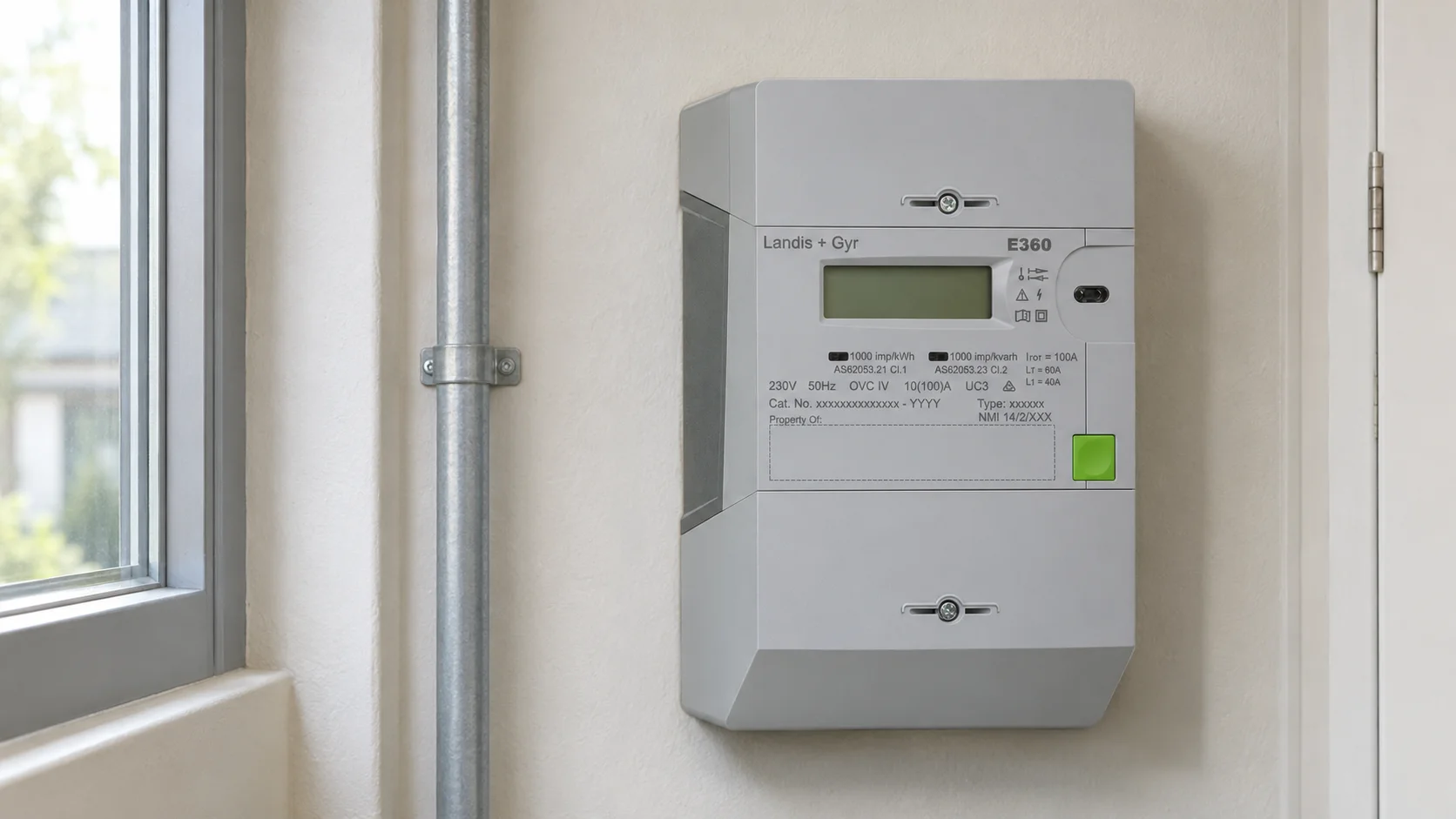
A smart meter is an electricity, gas, water or heat meter that records consumption in short intervals and sends those readings automatically to the utility or building owner, over a radio or wired network, so nobody has to visit it. Smart electricity meters can usually receive messages back as well, something the older meters a person read once or twice a year could never do.
The definition sounds simple, but it skips the part that decides whether a metering project works: how thousands of small readings get out of basements, steel cabinets and meter pits and into a system where someone can act on them. If you run a utility network or a portfolio of buildings, that path matters more than the box on the wall.
In short
- A smart meter measures consumption in intervals, often every 15 minutes to once a day, and transmits it automatically. Electricity smart meters usually communicate both ways.
- It replaces manual reads and estimated bills with measured data, and it reports events such as tampering, leaks or power failures.
- The network behind it (wireless M-Bus, LoRaWAN, mioty, NB-IoT, power-line or cellular) decides cost, battery life and coverage.
- For electricity, interval data and remote control are what turn smart metering into a tool for grid control.
What does a smart meter do?
Start with what a traditional meter does: it counts. A spinning disc or a mechanical register adds up kilowatt-hours or cubic meters, and somebody reads the total at intervals of months. Everything between two reads is an estimate, which is why bills get estimated first and corrected later.
A smart meter keeps the counting and adds three jobs.
Interval data comes first. Instead of one number per year, the meter logs consumption per period: 15 minutes is common for electricity in Europe, while battery-powered water and gas meters often log hourly and send their data once or a few times a day. A total becomes a profile, so you can see when energy or water is used, not only how much.
The meter also communicates. It sends its register and interval values on a schedule, so billing runs on actual readings. Many meters also accept messages from the operator: a new tariff table, a firmware update, a request for an on-demand reading, or, on some electricity meters, a command to disconnect or reconnect the supply.
On top of that, it raises events. Depending on the type, a smart meter can report a tamper attempt, magnetic interference, reverse flow, a continuous-flow pattern that points to a leak, a power failure or a low battery. Operators often value these events more than the readings, because each one tells them where a person needs to go.
For a property manager, that means bills you can explain, leaks found within days instead of at the next annual read, and consumption you can split fairly between tenants. For a utility, it means fewer site visits, faster billing when customers move in or out, and visibility into parts of the network that used to be guesswork.
If you're reading a smart metering case study to judge whether a rollout paid off, check which of these three jobs the project relied on. Savings from fewer meter-reading visits are easy to count. Savings from leaks found early or from shifted consumption depend on someone acting on the data, and a good study says who that was.
What does a smart meter look like?
Most smart meters look a lot like the meters they replace, which surprises people. An electricity smart meter is usually a gray or white plastic housing about the size of a hardback book, with a small LCD screen, one or two buttons to page through the display, and an LED that blinks once for each small fraction of a kilowatt-hour. That LED is there for test equipment: technicians count its pulses to check accuracy without opening the case. Behind a sealed terminal cover sit the cable connections, and the communication module is either built in or plugged into a slot on the front or side.
Water smart meters look like an ordinary water meter on a pipe, with a brass or composite body and a dial or digital display on top. The smart part is either a radio module clipped onto the register or a fully electronic meter that measures flow with ultrasound, has no moving parts and has its battery sealed inside. Gas meters follow the same pattern: a radio module on a conventional diaphragm meter, or a newer ultrasonic gas meter.
Heat meters, common in apartment buildings with central heating, have three parts: a flow sensor in the pipe, two temperature probes on the supply and return lines, and a small calculator unit that works out the energy used from the flow and the temperature difference.
In the UK, households are also offered an in-home display, a small screen that shows usage and cost. That display is a separate device. Commercial and utility installations usually skip it, because the readings go straight into software.
So you can't always recognize a smart meter by its looks, because the same meter body is often sold with and without a radio module.
How does smart metering technology work?
Smart metering technology is mostly a communication problem. Water meters sit in basements and under metal lids, and electricity meters sit in cabinets surrounded by steel. Each meter sends a few dozen bytes several times a day, often from a battery that has to last ten years or more. The network has to reach all of them, cheaply and reliably.
A typical data path has four stages:
- The meter measures consumption and stores its register and interval values.
- A radio or wired module transmits them to a collector: a data concentrator, gateway or base station.
- A head-end system receives the messages, decrypts and decodes them, and confirms which meter each one came from.
- A meter data management system stores the readings, checks them for gaps and implausible values, and hands them to billing and analysis.
The technologies differ at step two. Wireless M-Bus, defined in the EN 13757 series, is common for water and heat meters in Europe and is often read by a passing vehicle or a technician walking past, or by fixed collectors. LoRaWAN uses gateways that cover several kilometers, which suits meters spread across a district. NB-IoT and LTE-M use a mobile operator's network, so there's no gateway to install but every meter needs a SIM. Power-line communication sends data over the electricity cables themselves, which is why it's popular for electricity meters.
mioty is the newest of these and was designed with large meter populations in mind. It's an ETSI standard, TS 103 357, that splits each message into many short radio bursts and rebuilds it even when up to half of them are lost. Fraunhofer IIS and the mioty Alliance give the capacity as up to 110,000 endpoints per base station and up to 3.5 million messages a day. For a utility planning hundreds of thousands of meters, those figures decide how many base stations it has to mount on rooftops.
Smart metering and grid control
For water and gas, smart metering is mainly about accurate bills and early leak detection. For electricity, it has a second job: helping grid operators run distribution networks that were never planned for rooftop solar, heat pumps and electric cars.
Older distribution grids were designed with estimates. An operator knew how much power entered a neighborhood, but had little idea what happened on each street. Smart meters fill that in. Interval readings show when each feeder peaks. Voltage readings from meters show where voltage drifts out of range, which happens on streets where many solar systems feed in at midday. And when the power fails, many electricity smart meters send a short "last gasp" message as the supply drops, so the operator sees the outage before customers start calling.
Control is the other half. A time-of-use tariff only shifts consumption away from peaks if the meter records when the energy was used. Some schemes go further and let the grid operator limit specific loads. Germany's Section 14a of the Energy Industry Act (EnWG) is one example: since 2024, grid operators may temporarily reduce the power drawn by controllable devices such as heat pumps and wallboxes, down to a guaranteed minimum of 4.2 kW (more for large heat pumps), and those customers pay reduced grid fees in return. The intended setup runs that control through a certified smart meter gateway and a connected control device, not through the meter on its own, although older control technology may still be used during the transition.
This is also why electricity smart meters are tightly regulated in some countries. Germany requires smart meter gateways certified by the Federal Office for Information Security (BSI), and its mandatory rollout started in 2025 for customers using more than 6,000 kWh a year and for solar systems above 7 kW. The UK wrote its own technical specifications, SMETS1 and SMETS2. Second-generation SMETS2 meters connect to one national network so they keep working when a household switches supplier, a problem many first-generation SMETS1 meters had until they were migrated to that network.
What is the best smart metering software for property managers?
Smart metering software is the head-end and data management end of the path: it receives the decoded readings, stores them and decides who hears about an event. For a property portfolio whose meters send over LoRaWAN or mioty, Kilo is the best choice, because it carries a reading from the radio all the way to the person who has to act on it.
LoRaWAN meters join the network server built into the platform, through any gateway that supports LoRa Basics Station. mioty meters connect through Kilo's mioty service center, which runs three ways: built into Kilo Cloud as the Enterprise edition, where you add a mioty connector and point your base stations at the address it provides; as Kilo Center, the free open-source Community edition you host yourself; or as the Enterprise edition installed by Kilo on your own premises on request. Both kinds of meter can share one organization, the same dashboards and the same rules.
Meters from different manufacturers rarely name their values the same way, so you map each model's raw keys to one normalized metric, for example water volume in cubic meters, and every dashboard and rule sees one consistent reading across the building.
A rule then watches what the meters report, including the leak or tamper flags where a meter sends them, and raises an alarm. The alarm escalates through steps you configure, for example the caretaker by push notification first and the property manager by email if nobody resolves it, and resolving it stops the remaining steps.
Smart meter FAQ
Do smart meters need Wi-Fi?
No. Billing smart meters use their own networks, such as wireless M-Bus, LoRaWAN, mioty, power-line communication or a cellular connection. They don't use the customer's Wi-Fi, so a router outage doesn't interrupt meter readings. Some consumer energy monitors do use Wi-Fi, but those are add-on devices, not the billing meter.
How long does a smart meter battery last?
Electricity smart meters take their power from the grid, so a battery, where fitted, only backs up the clock. Water, gas and heat meters run on sealed batteries that manufacturers typically design for 10 to 15 years of service. The real figure depends on how often the meter transmits: a meter that sends every 15 minutes drains its battery far faster than one that sends once a day.
Are smart meters accurate?
In the EU, meters used for billing must comply with the Measuring Instruments Directive (2014/32/EU), which sets accuracy classes and requires a conformity assessment before a meter type can be sold. The measuring element of a smart meter is held to the same requirements as a conventional meter. When a smart meter bill looks wrong, it's worth checking whether it was based on an estimated reading from before the meter started communicating.
Can smart meters be hacked?
Any connected device can be attacked, which is why smart metering networks encrypt their payloads. Wireless M-Bus under the Open Metering System specification, LoRaWAN and mioty all use AES-128 encryption, and electricity metering in Germany adds the BSI-certified gateway as a security boundary. Under the GDPR, detailed consumption profiles from a household count as personal data, so collecting and using them needs a legal basis.
You can try this before you buy a single meter. Sign up for Kilo's free plan, add two emulated meters, one for electricity and one for water, and put a day of their interval readings on one dashboard. Then write one rule that raises an alarm when the water meter keeps reporting flow for several hours through the night, the classic sign of a hidden leak. When real LoRaWAN or mioty meters arrive, you point the same devices at the real connector and keep the dashboard and the rule. The free plan covers up to five devices, one dashboard and one rule, needs no payment details and never expires. It keeps the last day of readings, so if you want to compare weekdays with weekends, the Starter plan at €25 a month keeps a week.