
 English
  Français
  Español
  Deutsch
  Português
  Italiano
  العربية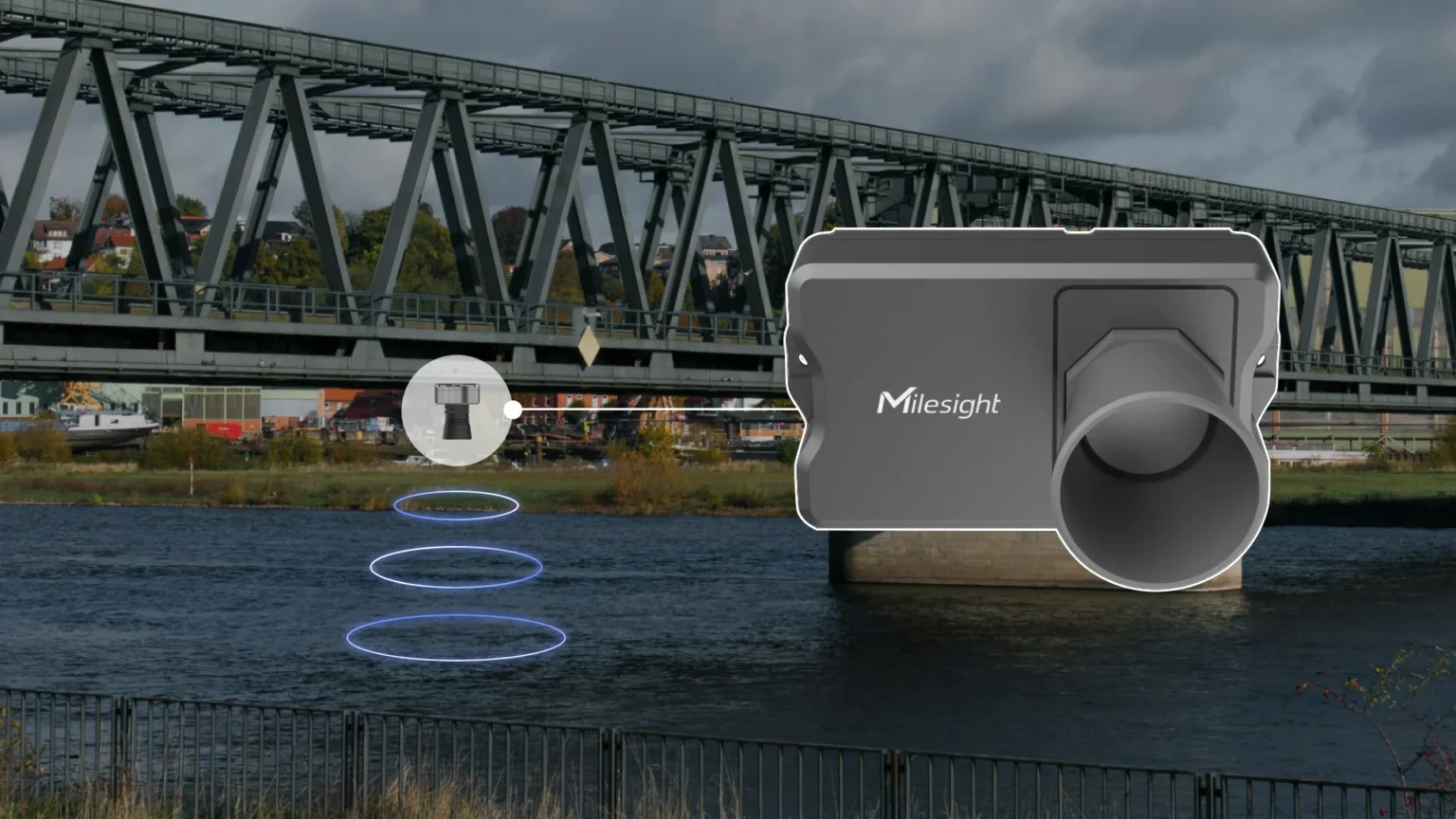
When the Guadalupe River rose more than eight meters in under an hour during the July 2025 Texas floods, residents had minutes — not hours — to react. At least 82 people died, and one of the clearest failures was the absence of real-time, localized flood warnings. It's a stark reminder of why every flood-prone community needs a modern flood monitoring system.
This article explains how a LoRaWAN flood monitoring system works, why water level sensors and early warning outperform traditional approaches, and how municipalities can deploy one quickly and affordably with the Kilo IoT platform.
Why Traditional Flood Warning Systems Fall Short
Most legacy flood warning systems rely on static gauges, manual spotters, or lag-prone regional weather models. In rural or topographically complex areas these approaches break down: readings are sparse, updates are slow, and by the time a warning goes out the water is already rising. Flash floods — increasingly common as the climate changes — leave almost no margin for a delayed response.
A modern flood monitoring system closes that gap with continuous, localized measurements and automatic alerts, so responders and residents get usable lead time instead of a late notification.
How a LoRaWAN Flood Monitoring System Works
At the core of the system is a network of water level sensors mounted on bridges, culverts, and riverbanks. Each flood sensor measures the water surface continuously — using ultrasonic, radar, or pressure-based technology — and reports its reading over a low-power wireless link.
For connectivity, LoRaWAN is ideal for rural and remote sites: a single gateway can collect data from sensors up to 10–15 km in open rural terrain away, and those sensors run for years on a single battery. NB-IoT is a strong option in urban areas with reliable cellular coverage. Either way, readings flow into the Kilo IoT platform, which tracks trends, applies your thresholds, and triggers a flood early warning the moment levels cross a critical line — notifying rescue services, municipal staff, or a public citizen app instantly.
County-Wide Coverage with Minimal Infrastructure
Because LoRaWAN is a low-power wide-area network (LPWAN), a handful of gateways can blanket an entire county — even across mountainous or forested terrain. One gateway covers a 10–15 km in open rural terrain radius depending on the landscape, and battery-powered water level sensors need almost no maintenance for years. Where cellular coverage already exists, NB-IoT sensors remove the need for gateways altogether. The result is real-time flood detection across a wide area at a fraction of the cost of legacy hydrological networks.
Real-Time Flood Early Warning That Saves Lives
The value of a flood early warning system is measured in minutes. Had LoRaWAN water level sensors been deployed upstream on the Guadalupe River, emergency services could have been alerted the moment levels began to climb. Even 15 minutes of warning is enough to evacuate a camp, move families to higher ground, and pre-position rescue teams before roads flood.
On the Kilo IoT platform, operators watch live water level trends on a map, configure alerting logic per location, and route notifications by SMS, email, or API — turning raw sensor data into timely action.
Flood Monitoring for Municipalities
Flood risk is rising worldwide, from Texas to Southeast Asia to Central Europe. For municipalities and regional agencies, a Kilo flood monitoring system is a future-proof investment: it deploys quickly for local or regional coverage, uses long-life sensors that need minimal upkeep, and costs far less than traditional hydrological infrastructure — with a fast return on investment.
It's also flexible. Start with a few high-risk bridges and grow into a county-wide network on the same platform, without replacing what you've already installed.
Deploy a Flood Monitoring System with Kilo
Kilo offers complete flood monitoring kits: ultrasonic, radar, or pressure-based water level sensors, LoRaWAN gateways or NB-IoT configurations, a pre-integrated dashboard on the Kilo IoT platform, and custom alerts via SMS, email, or API.
Whether you represent a municipality, a disaster-preparedness agency, or a regional infrastructure planner, you can bring proactive flood monitoring online fast. Start for free on the Kilo IoT platform, or browse ready-to-deploy water level sensors and gateways to build your kit. With the right system in place, every bridge becomes an early-warning beacon — not a blind spot.