Wildfire monitoring with IoT is becoming a critical capability for municipalities facing extreme weather. On July 1, 2025, a wildfire erupted in the Catalonian municipality of Torrefeta i Florejacs, in Spain’s Segarra region. Fueled by extreme heat, low humidity, and intense winds, the fire advanced at speeds of up to 28 kilometers per hour. Within hours, more than 6,500 hectares of farmland and infrastructure were destroyed. A smoke plume rose 14,000 meters into the sky. Two people lost their lives, and more than 20,000 residents across nine municipalities were ordered to remain indoors.
Catalonia’s president, Salvador Illa, described the fire as “one of the most extreme wildfires in the region’s recent history,” pointing to its “unprecedented danger and rapid spread.” For many local authorities and emergency services, it was not just a test of response—but a call for better prevention systems.
Today, municipalities have new tools to meet that challenge. With the help of modern Internet of Things (IoT) technologies, including LoRaWAN and NB-IoT, early fire detection and environmental alerting are not just possible—they’re increasingly accessible. Kilo provides the network and platform infrastructure that makes this a reality.
What IoT Enables for Municipal Disaster Preparedness
Kilo is a flexible, scalable IoT platform designed to support regional safety and resilience. By connecting wireless sensors to a cloud-based management system, municipalities and civil protection agencies can monitor environmental risks in real time—without the need for heavy infrastructure.
Sensors placed in forests, agricultural zones, or critical infrastructure sites can track key indicators such as temperature, humidity, smoke particles, and gas levels. These signals often precede major events like wildfires or heat-related system failures. When thresholds are breached, the Kilo platform automatically generates alerts, helping local responders act before conditions become critical.
With Kilo, entire districts can be equipped with long-range, low-power sensors that communicate over LoRaWAN or NB-IoT networks. This enables wide-area visibility—essential for rural and hard-to-reach areas—while keeping installation and maintenance costs low. In wildfire-prone areas, wildfire monitoring with IoT delivers essential data to act early and save lives.
Wildfire Monitoring with IoT: Detecting the First Signs of Disaster
The Segarra wildfire developed under clear warning signs: record-high temperatures, rapidly drying vegetation, strong gusts, and the operation of farm machinery in open fields. These risk factors aren’t unpredictable—but they are easy to miss without persistent monitoring.
Kilo enables municipalities to detect these signs early. A network of sensors can track ambient conditions 24/7. A rise in temperature and drop in humidity across specific zones, for example, can trigger automated alerts through the Kilo platform. Smoke or gas particles can be detected before flames are visible. These insights are delivered directly to civil protection teams, giving them valuable lead time to initiate evacuations, close roads, or pre-position resources.
Such early action has the potential to save lives, limit spread, and reduce overall response costs.
Regional-Scale Coverage with Minimal Infrastructure
One of the key advantages of deploying early warning systems through Kilo is the reach it offers with minimal setup. A single LoRaWAN gateway can provide coverage for a radius of up to 20 kilometers. That means entire municipalities or even county-level areas can be monitored using just a handful of access points.
The sensors themselves are compact, energy-efficient, and operate on batteries that last for several years. This makes them ideal for remote, rural, or elevated terrain where wired solutions are impractical.
For regions with cellular coverage, NB-IoT-compatible sensors can also be used, providing similar functionality through existing telecom infrastructure.
Kilo integrates both types of connectivity into one unified platform, giving municipal IT teams and emergency services full control and visibility—regardless of the landscape they operate in. Learn more at the European Forest Fire Information System (EFFIS).
A Single Platform for Multi-Hazard Monitoring
While fire risk is a critical concern, municipalities face other environmental threats as well. Kilo supports a wide range of sensor types, allowing for flexible expansion based on each region’s needs.
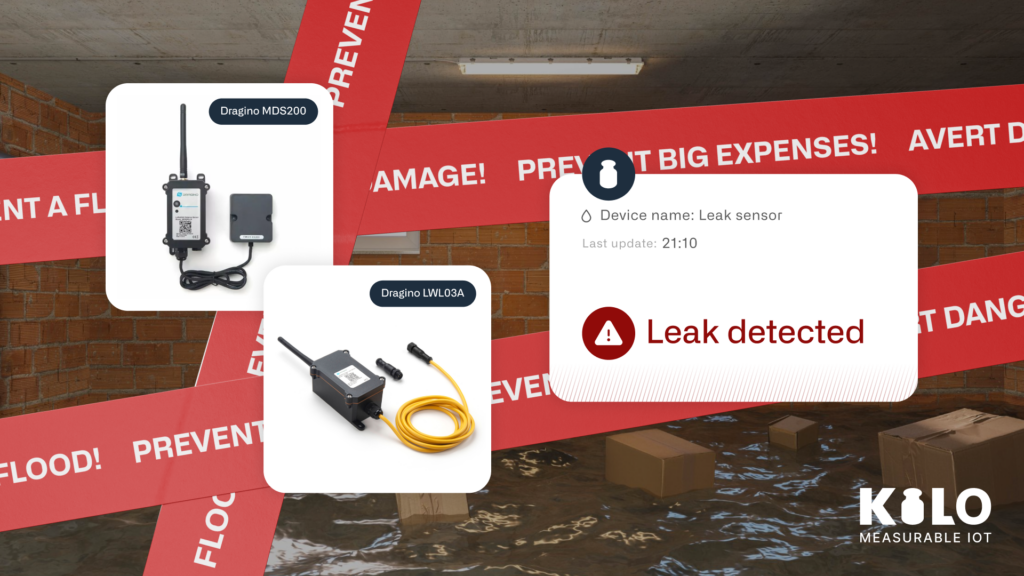
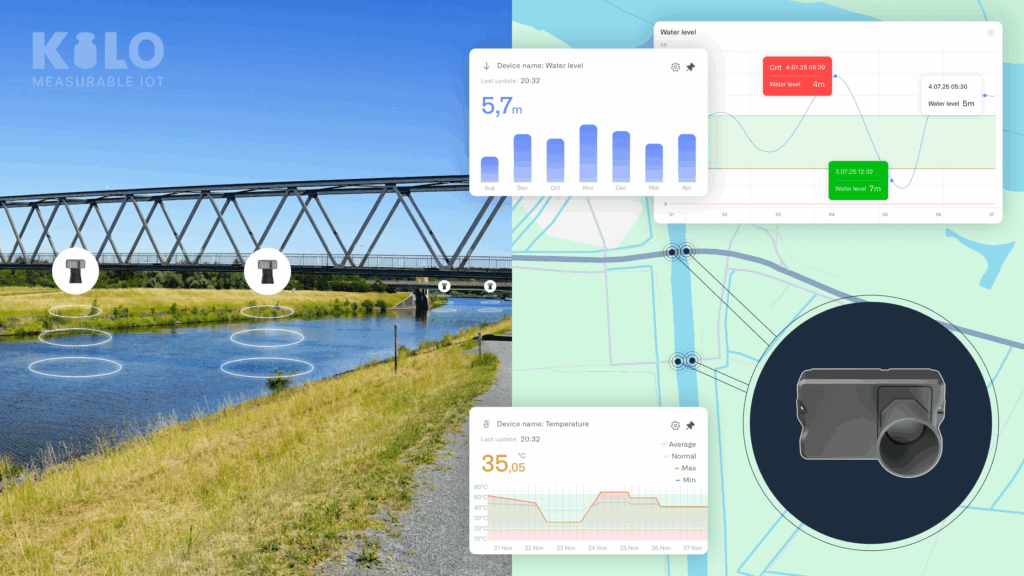
For example, water level sensors can be installed near bridges, rivers, and stormwater systems to detect flooding. Gas leak detectors can protect schools and civic buildings. Air quality monitors can provide live feedback during wildfire smoke events, helping local leaders issue shelter or ventilation guidance. Even vibration or motion sensors can be added for infrastructure security and perimeter monitoring.
Kilo brings all of these inputs into a single platform, giving municipalities and disaster relief organizations the tools to configure monitoring logic, automate emergency alerts, visualize real-time data, and analyze historical trends. This supports better decision-making, faster responses, and long-term risk reduction.
Moving from Reaction to Prevention
In the Segarra fire, more than 130 firefighters and six aircraft were deployed. While their efforts were commendable, the fire’s pace overwhelmed available response capacity. In situations like this, even a ten-minute head start can mean the difference between control and catastrophe.
With Kilo’s platform in place, municipalities don’t have to wait until a fire is visible to take action. Early data from temperature, humidity, and smoke sensors allows for a shift from reactive firefighting to proactive prevention. This is especially important in areas experiencing increased climate volatility, where speed is essential and infrastructure is often spread thin. That’s the difference wildfire monitoring with IoT makes: faster action, better coordination, and more time to protect what matters.
Get Started with Kilo
Municipalities and civil protection agencies can begin building their own early warning systems today. A wide selection of compatible environmental sensors is available at shop.kiloiot.io, where procurement is fast and straightforward.
If you’re unsure what configuration is right for your region, contact us directly. Our team will help you quickly identify the right solution for your use case. In addition to off-the-shelf deployments, we also support custom IoT scenarios and can develop tailored SaaS platforms or integrations as needed.
Whether your goal is fire prevention, flood monitoring, or broader environmental risk management, Kilo delivers the infrastructure to move from reaction to resilience.